
Day 3, Friday, 28th August 2026

08.15-09.50
Messe Zürich, Room 1, Hall 7, Level 3
Clinical Cases and their pathological correlations – teaching case of the year
(Part I)
- Stadtspital Zurich: Carolin Xander
- HOCH St. Gallen: Dennis Arnold
- USB Basel: Lucija Markovic
- LUKS Lucerne: Corsin Brand / Vera Gasser
- KSA Aarau: Carole Zahn / Jamila Hess
- Insel Bern: Alexandra Junge / Georg Knechtl
Chairs: Lisa Weibel, Emmanuel Laffite, Helmut Beltraminelli

09.00-12.10
Messe Zürich, ROOM 3, Quickspace, Hall 5
Swiss Nurses in Dermatology Concference
Chairs: Heiko Müller / Kathrin Thormann

09.50 – 10.00
Short break

10.00-10.30
Messe Zürich, Room 1, Hall 7, Level 3
Award Ceremony
Awards and Poster Prices ()
- Incyte Innovative Dermatology Award
- Skin Cancer Research Award, Verein für Hautkrebsforschung, sponsored by Pierre Fabre
- Sanofi-Regeneron Dermatology Award: Spotlight on Type2 Inflammation
- ———————
- Poster Prices SSDV
- Poster Price: Bruno Bloch
- Poster Price: UW Schnyder
- Poster Price IST / Psycho-Dermatology
Chair: Olivier Gaide

10.30 – 12.00
Messe Zürich, Room 1, Hall 7, Level 3
Clinical Cases and their pathological correlations
(Part II)
- USZ, Zurich: Intan Pramono
- CHUV Lausanne: Héloïse Wüthrich
- HUG Geneva: Monica Sabau
- EOC Bellinzona: Riccardo Curatolo
- KiSpi Zurich: Laura Allen / Lisa Weibel
Chairs: Maya Wolfensperger, Antonio Cozzio, Simon Müller

12.00-13.15
Lunch break

12.30 – 13.00
Messe Zürich, Room 1, Hall 7, Level 3
Symposium 8: SEBORRHEIC DERMATITIS: New Ways to Understand and Treat Scalp Pruritus
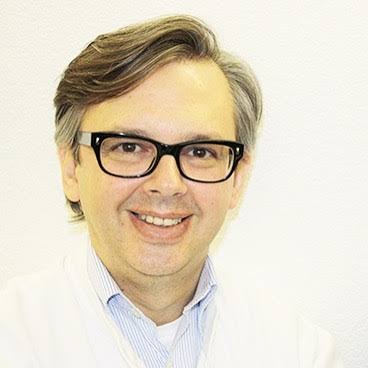
Ralph Trüeb (Wallisellen, Switzerland)
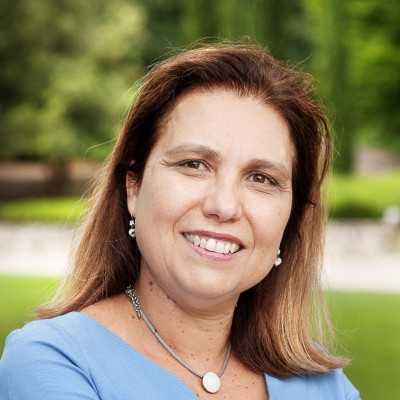
Valérie Mengenau (Toulouse, France)
Pierre Fabre
12.30 – 13.00
Messe Zürich, ROOM 2, Quickspace, Hall 5
Satellit 11: Access to Skincare: How to Achieve on a Global Scale?

Peter Schmid-Grendelmeier (Zürich, Switzerland)
Chair: Natalie Anasiewicz
l’ORéal
12.30 – 13.00
Messe Zürich, ROOM 3, Quickspace, Hall 5
Satellit 12: The Face in the spotlight: Expert Perspectives on Managing Atopic Dermatitis in the Most Challenging Area

Ahmad Jalili (Buochs, Switzerland)

Antoios Kolios (Zürich, Switzerland)
Almirall
13.00 – 13.15
Short break
13.30 -14.50
Messe Zürich, ROOM 3, Quickspace, Hall 5
Swiss Nurses in Dermatology Conference
Part II ()
Chairs: Heiko Müller / Kathrin Thormann

13.15- 14.15
Messe Zürich, Room 1, Hall 7, Level 3
Gesundheitspolitische Entwicklungen und Herausforderungen
SSDV-Committee for Political Strategy and Communication

Kristian Schneider (Stv. Direktor BAG, Bundesamt für Gesundheit)

Bettina Mutter (Bern)
Chair: Michael Geiges

14.15- 15.00
Messe Zürich, Room 1, Hall 7, Level 3
Politics: TARDOC


15.00 – 15.25
Coffee break / Credits / Exhibition

15.25 – 15.55 / Key Note Lecture
Messe Zürich, Room 1, Hall 7, Level 3
Canvas, oil and paint in dermatology
Günter Burg (Zurich, Switzerland)
Chair: Reinhard Dummer
Introduction
Dermatology is an art. Just as with a painter, the visual aspect is paramount for the dermatologist. Canvas, oils (Viofom zinc oil) and dyes (brilliant green, methylene blue, pyoctanin, Castellani’s solution) and tar were – at least in classical dermatology – indispensable topical treatments. ‘Colourful patients’ were iconographically representative of dermatology, and the classic maxim applied: ‘The younger the assistants, the more colourful the patients’.
Method
Using our own records and documents**, as well as those provided by third parties, and sources accessible on the internet, we filtered out from several thousand paintings those that reveal or suggest pathological skin changes. All images used are in the public domain, so no copyright has been infringed. Clinical images and moulages were consulted for comparison.
Results
Perfect, idealised and flawless skin exists only in paintings of mythological and allegorical figures. The incidence of dermatoses depicted in paintings in no way corresponds to the frequency observed in clinical practice. Nevi are depicted most frequently. In addition, there are paintings depicting eczema, vascular and neurological disorders, tumours, autoimmune and connective tissue diseases, infections and others.
It is not only the artistic careers of the individual artists—with their era-defining and, in some cases, highly distinctive personal stylistic elements and painting techniques—that are of interest, but also the (medical) histories of the people portrayed.
Discussion
It was only the description of various efflorescences by Robert Willan and Thomas Bateman over 200 years ago that replaced the ancient understanding of the skin as a monomorphic excretory organ and paved the way for the development of modern dermatology, which is elaborately presented in the diversity of diagnoses in Hebra’s classic atlas.
Since modern dermatology, with its more than two thousand diagnoses, did not yet exist during the lifetime of the ‘Old Masters’, the artists – insofar as their patrons permitted – captured on canvas in oil and paint what they saw; These could also include disfiguring and compromising changes, such as the bulbous nose of the banker Sassetti, the rosacea of Pope Clement XIII, late-stage syphilitic changes in Gerard Lairesse, and various age-related changes.
It must be acknowledged that only a few of the suspected conditions are not supported by medical history and may be speculative. Most remain a matter of interpretation from today’s perspective – captured on canvas in oil and paint. With all due respect for the magnificent works of the ‘Old Masters’, a critical, albeit not art-historical, analysis by a detail-obsessed dermatologist from a new perspective may be permitted.
*G. Burg, M. Geiges, C. Hug: DermARTologie. Das Inkarnat. Die Haut in der bildenden Kunst. Springer|Nature, Berlin 2022 (engl. & deutsch)
** Courtesy of M. Geiges (Zürich), B. Wüthrich (Zürich), E. Bröcker (Würzburg), U. Wollina (Jena)
15.30 -16.30
Messe Zürich, ROOM 3, Quickspace, Hall 5
Swiss Nurses in Dermatology Conference
Part III (General Assembly)
Chairs: Heiko Müller / Kathrin Thormann

15.55 – 16.25 / Key Note Lecture
Messe Zürich, Room 1, Hall 7, Level 3
Evidence, Innovation and Responsibility in Aesthetic Dermatology
Monika Hess Schmid (Zurich. Switzerland)
Chair: Thomas Kündig

16.30 – 17.00 / Honorary Lecture
Messe Zürich, Room 1, Hall 7, Level 3
Skin Memories
Daniel Hohl (La Conversion, Switzerland)
Chair: Olivier Gaide

17.00 – 17.15
Messe Zürich, Room 1, Hall 7, Level 3
Closing statement
Thomas Kündig (USZ. Zürich)